
When you wake up with a fever, sore throat, cough, or body aches, waiting days to figure out what is causing your symptoms can feel like the hardest part. Rapid testing for sick visits helps shorten that uncertainty. In many cases, it allows your physician to identify common infections during the appointment, so treatment decisions can be made sooner and with more confidence.
For adults balancing work, family, and ongoing health needs, speed matters. But accuracy, safety, and follow-through matter just as much. A good sick visit is not only about getting a test. It is about making sure your symptoms are evaluated in context, especially if you have asthma, diabetes, high blood pressure, heart disease, or another chronic condition that can affect how an illness should be managed.
Why rapid testing for sick visits matters
Rapid tests can be very helpful when symptoms point toward infections that need quick confirmation or a clear next step. Depending on your symptoms and exam findings, testing may help identify illnesses such as influenza, COVID-19, strep throat, or other conditions your physician suspects based on the visit.
This matters because many infections can look similar at first. A sore throat could be a viral illness, strep, postnasal drainage, or irritation from reflux. A cough could be flu, COVID-19, bronchitis, allergies, or an asthma flare. Rapid testing adds useful information, but it works best as part of a full medical assessment rather than as a stand-alone answer.
That distinction is especially important in primary care. A physician who knows your history can connect your current symptoms with your medications, your past illnesses, your risk factors, and whether you may need more than a simple test and prescription.
What happens during a sick visit
A sick visit usually begins with a review of your symptoms, when they started, how they have changed, and whether you have had fever, congestion, vomiting, diarrhea, shortness of breath, chest discomfort, or fatigue. Your physician will also ask about recent exposure to illness, travel, home testing, and any chronic health issues that could raise your risk of complications.
The physical exam is still a key part of the visit. Even when rapid testing is available, your physician is looking at the full picture – your temperature, oxygen level, throat, lungs, heart rate, hydration, and overall appearance. These details help determine whether rapid testing is appropriate, which test is most useful, and whether additional evaluation is needed.
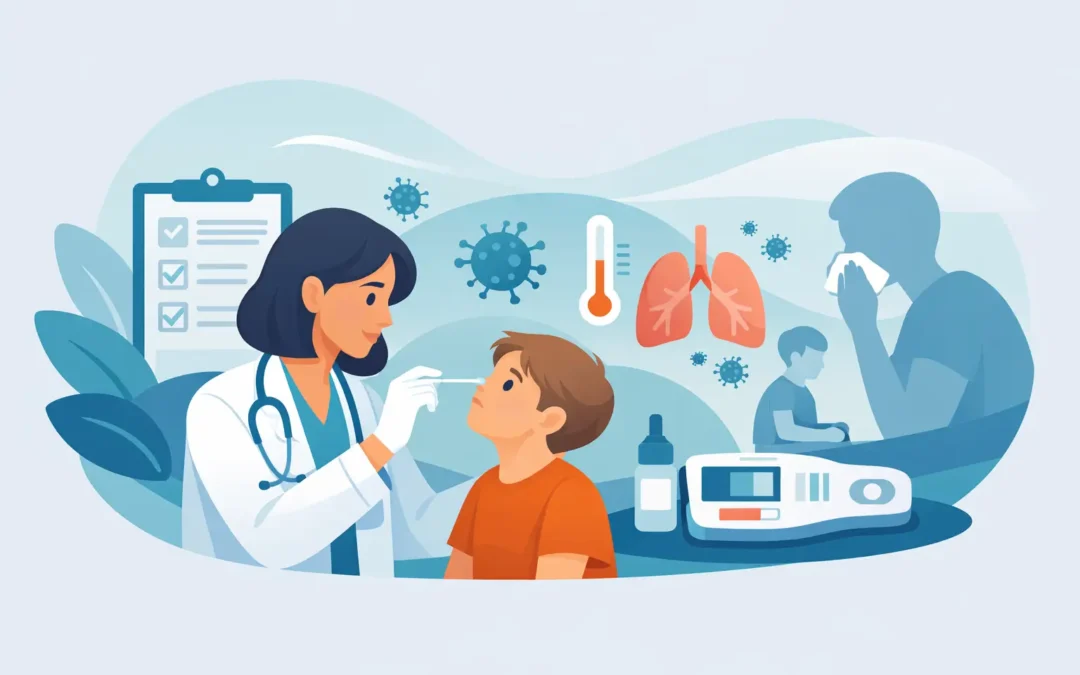
If testing is recommended, the sample is often collected in the office during the same appointment. Depending on the test, this may involve a nasal swab, throat swab, or another simple specimen collection. Results for certain rapid tests may be available quickly, which can help guide treatment before you leave.
Common conditions rapid tests may help identify
One of the most common uses of rapid testing is for upper respiratory symptoms. During flu season, for example, it can be useful to know whether your fever, chills, headache, and body aches are due to influenza. Early identification may help determine whether antiviral treatment is appropriate, particularly for older adults or patients with chronic medical conditions.
COVID-19 testing can also be important when symptoms include cough, fever, congestion, sore throat, fatigue, or exposure to someone who is sick. A timely diagnosis may affect isolation guidance, return-to-work planning, and decisions about treatment for patients at higher risk.
For patients with a significant sore throat, swollen glands, fever, or painful swallowing, rapid strep testing may be considered. This can help avoid unnecessary antibiotics when the cause is viral, while also making sure bacterial infection is treated when appropriate.
In some cases, testing is less about confirming a common infection and more about deciding what to rule out next. If symptoms are severe, persistent, or unusual, a rapid test may be only one part of a broader workup.
What rapid testing can and cannot tell you
Rapid testing is useful, but it is not perfect. A negative result does not always mean that you do not have the illness in question. Timing matters. If you are tested very early or later in the course of illness, the result may be less reliable depending on the test used.
Symptoms also matter. If your exam strongly suggests a particular diagnosis, your physician may still recommend treatment, repeat testing, or further evaluation even if an initial rapid test is negative. On the other hand, a positive result still needs to be interpreted in light of your symptoms and medical history.
That is why physician-guided testing is different from relying only on a home test or a brief retail encounter. The goal is not simply to produce a result. It is to make the right clinical decision for your specific situation.
Rapid testing and responsible treatment
One of the biggest benefits of in-office testing is that it can support more precise treatment. If you have confirmed strep throat, antibiotics may be appropriate. If your illness appears viral, antibiotics may not help and could expose you to unnecessary side effects. If you test positive for flu or COVID-19 and are within the right treatment window, prompt therapy may reduce complications for some patients.
This approach also helps protect long-term health. Overuse of antibiotics can contribute to resistance and may disrupt normal gut bacteria. Delayed treatment, however, can also create problems when a condition truly needs attention. The right balance comes from combining rapid results with medical judgment.
Adults with chronic conditions often need extra care here. A respiratory infection that seems mild at first can trigger asthma symptoms, worsen blood sugar control, elevate blood pressure, or lead to dehydration. Rapid identification can help your physician adjust the plan early, including medication advice, symptom monitoring, and follow-up instructions.
When same-day testing is especially helpful
Same-day evaluation is often most useful when symptoms are new, worsening quickly, or affecting your ability to function. If you have high fever, severe sore throat, persistent cough, wheezing, unusual fatigue, or concern about exposure to flu or COVID-19, timely testing can help reduce guesswork.
It can also be valuable when you need a clear plan for work, caregiving responsibilities, or travel. Many adults do not have the luxury of waiting several days to decide whether they should isolate, rest, start treatment, or seek more urgent care. A same-day appointment with appropriate rapid testing can move that process along while keeping the focus on safety.
At the same time, not every sick visit requires a rapid test. Some problems are diagnosed mainly through history and exam, and others may require different testing altogether. Good care means using testing thoughtfully rather than automatically.
Choosing a primary care office for rapid testing for sick visits
Convenience matters, but continuity matters too. When you are sick, it helps to be seen by a team that can evaluate the immediate problem and also understand your baseline health. That is especially true if you take multiple medications, have ongoing conditions, or need follow-up after the acute illness passes.
A community-based primary care practice can often offer a more complete experience than a one-time visit elsewhere. Your physician can assess the current infection, review your chronic conditions, monitor recovery, and address what comes next if symptoms do not improve as expected. That continuity reduces fragmented care and makes it easier to catch complications early.
For adults in Katy and surrounding communities, Medical Office of Katy provides this kind of physician-led, patient-centered care with a focus on timely diagnosis, evidence-based treatment, and continuity that supports long-term health.
Questions patients often have
Many patients want to know whether they should come in right away or wait a day or two. The answer depends on your symptoms, your risk factors, and how quickly things are changing. Fever with shortness of breath, chest pain, dehydration, confusion, or significant weakness should never be ignored.
Patients also ask whether a negative home test is enough reassurance. Sometimes it is, but not always. If you still feel significantly ill, have a worsening cough, persistent fever, or a medical condition that raises your risk, an office visit may still be the safer choice.
Another common question is whether treatment can begin before results are back. In some situations, yes. In others, waiting for the rapid test improves decision-making. It depends on the suspected illness, the treatment window, and your overall health status.
Feeling sick is stressful enough without added uncertainty. The right sick visit should leave you with more than a test result. It should give you a clear explanation, a treatment plan that fits your needs, and confidence about what to watch for next.