
A cough that keeps you awake, chest tightness during a walk, or needing your rescue inhaler more often can be early signs that asthma is no longer well controlled. A guide to asthma action plans can help turn those uncertain moments into clear next steps. Rather than relying on memory when symptoms are stressful, you and your medical provider create a written plan for your specific medicines, triggers, and warning signs.
Asthma is manageable for many adults, but control can change with allergies, respiratory infections, weather, workplace exposures, exercise, and missed medication doses. A personalized action plan supports day-to-day treatment while making it easier to recognize when you need a medication adjustment, a same-day medical visit, or emergency care.
What an asthma action plan does
An asthma action plan is a written set of instructions developed with your healthcare provider. It explains what your usual breathing should feel like, which medications you take every day, what to do when symptoms begin, and when to seek urgent help.
The plan should be personal. Two people may both have asthma but need different medications, doses, and escalation steps. A person whose symptoms are mostly triggered by spring pollen may have a different plan than someone with asthma affected by reflux, smoke exposure, viral illnesses, or exercise.
For adults balancing work, family, and chronic health needs, a clear plan can reduce avoidable delays in care. It also gives a spouse, adult child, caregiver, or trusted colleague useful guidance if symptoms become severe.
The three zones in an asthma action plan
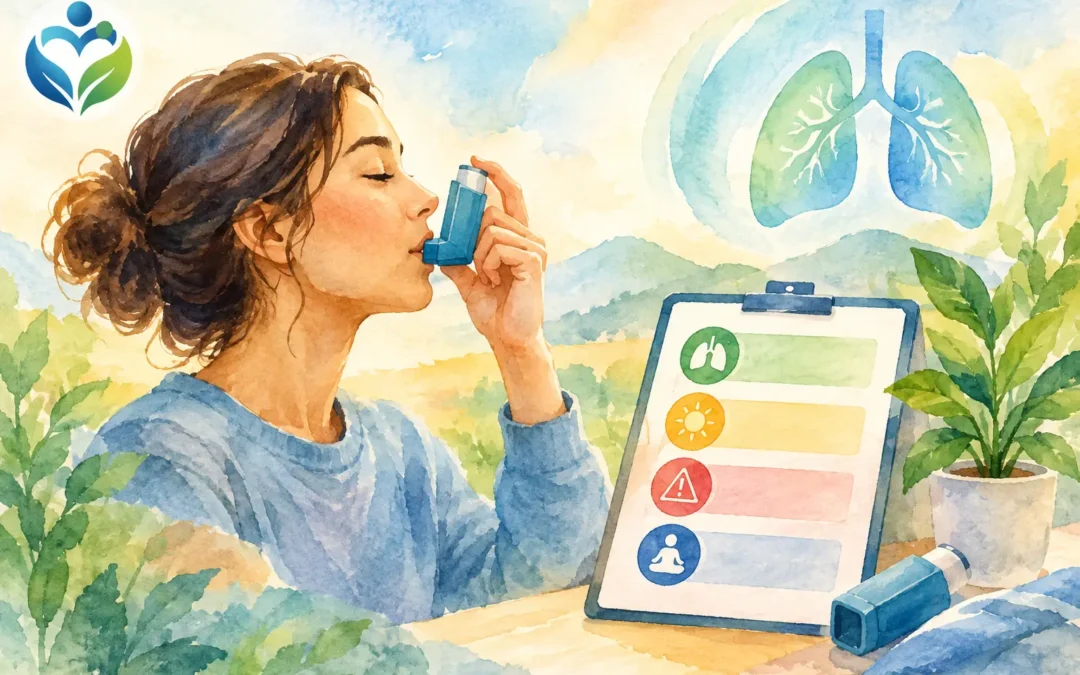
Most action plans use a traffic-light format: green for stable asthma, yellow for worsening symptoms, and red for a medical emergency. Your provider will fill in the details, including medication names and doses. Do not substitute another person’s instructions for your own plan.
Green zone: your regular routine
The green zone describes how you feel when your asthma is controlled. You should generally be able to breathe comfortably, sleep through the night without asthma symptoms, complete usual activities, and use your quick-relief inhaler rarely.
This section lists your daily controller medication, if prescribed. Controller medicines reduce airway inflammation over time. They are different from quick-relief or rescue medicines, which relax tightened airway muscles for faster symptom relief. A common reason asthma becomes poorly controlled is stopping a controller medicine once breathing feels better. Your provider can explain whether your medication is intended for daily prevention, symptom relief, or both.
The green zone may also include steps to limit known triggers. For example, avoiding tobacco smoke and vaping exposure, keeping windows closed during high-pollen periods when practical, or taking precautions around strong fragrances and cleaning sprays may reduce flare-ups. Trigger control helps, but it does not replace prescribed treatment.
Yellow zone: act early when symptoms change
The yellow zone is for symptoms that suggest your asthma is getting worse but are not yet an emergency. These may include coughing, wheezing, shortness of breath, chest tightness, waking at night with symptoms, or needing your rescue inhaler more than usual.
Your written plan will tell you exactly which quick-relief medication to use and when to contact your medical office. In many cases, acting early can prevent symptoms from progressing. If the instructions do not improve symptoms as expected, or if you are repeatedly entering the yellow zone, call for medical guidance. You may need an examination, inhaler technique review, testing, or a change to your long-term treatment.
Pay attention to patterns. Needing a rescue inhaler more often, limiting activity because of breathing, or waking at night due to cough or wheeze are not issues to simply accept as part of asthma. They are useful clinical information that can help guide safer treatment.
Red zone: get emergency help
The red zone identifies severe symptoms that require immediate action. Warning signs can include severe shortness of breath, struggling to speak in full sentences, symptoms that are rapidly worsening, blue or gray lips or fingernails, confusion, extreme drowsiness, or no improvement after using the rescue medication as directed.
Follow the emergency instructions on your plan and call 911 or seek emergency care immediately when severe symptoms occur. Do not drive yourself if you are severely short of breath or feel faint. Asthma attacks can worsen quickly, and waiting to see whether symptoms pass can be dangerous.
Peak flow readings: useful for some adults
Some action plans include peak flow readings, measured with a small handheld peak flow meter. The device estimates how quickly you can blow air out of your lungs. Your clinician may establish a personal best reading when your asthma is well controlled and set green, yellow, and red zone ranges based on that number.
Peak flow monitoring can be particularly helpful for people who do not notice early symptoms, have a history of serious exacerbations, or need an objective measure to guide treatment. It is not necessary for every patient. Technique matters, and numbers should be interpreted in the context of how you feel. Someone with significant breathing difficulty needs urgent attention even if a reading appears less concerning.
Make sure the plan names each medication clearly
Medication confusion is common, especially when inhalers have similar colors, when prescriptions change, or when a patient has medications from several providers. Your action plan should include the medication name, dose, device, timing, and purpose of each medicine. Bring every inhaler, including expired or rarely used ones, to an appointment when possible.
Ask your provider or pharmacist to watch your inhaler technique. Even an effective medication may not work well if the device is used incorrectly. Depending on the inhaler, you may need to prime it, coordinate a slow breath, hold your breath afterward, or use a spacer. If you use an inhaled corticosteroid, your clinician may recommend rinsing your mouth after use to reduce the chance of throat irritation or oral thrush.
Keep an eye on refill timing, too. Running out of controller medication can lead to preventable symptoms. On the other hand, going through rescue inhalers quickly is a reason to schedule a review rather than simply requesting another refill.
When to revisit your asthma action plan
An action plan should be reviewed at least during regular asthma follow-up visits and whenever your treatment changes. It also deserves attention after an urgent care visit, emergency department visit, hospitalization, course of oral steroids, or a significant flare-up.
Bring notes about symptoms, triggers, nighttime awakenings, activity limits, and rescue inhaler use. This information helps your provider assess whether asthma is controlled and whether another condition could be contributing to breathing symptoms. Allergies, sinus disease, reflux, sleep apnea, heart conditions, anxiety, and medication side effects can sometimes overlap with or complicate asthma symptoms.
For patients in Katy and the surrounding West Houston area, seasonal pollen, heat, humidity, and respiratory viruses may all affect asthma differently throughout the year. A plan that worked well last season may need an update before a predictable trigger period.
Keep your plan where it can help
A written action plan is most useful when you can find it. Keep a current copy at home and save a photo or digital version on your phone. If a family member or caregiver helps with your healthcare, make sure they know where it is and understand the emergency steps.
Your plan is not a replacement for medical care. It is a practical tool that helps you respond earlier and communicate clearly when you need help. If you have asthma symptoms that interfere with sleep, work, exercise, or daily life, a timely primary care visit can help you build or update a plan that fits your health needs. Clear instructions, correct medication use, and regular follow-up can make breathing easier and help you stay active with greater confidence.