
A broken wrist after a simple fall, a loss of height that seems to happen gradually, or back pain that does not have a clear cause can all point to something quieter going on in the background – bone loss. That is why osteoporosis screening for women matters. It helps identify thinning bones before a fracture becomes the first sign.
Why osteoporosis can go unnoticed for years
Osteoporosis is often called a silent condition because bone loss usually does not cause symptoms early on. Many women feel well and stay active while their bones become weaker over time. The first warning may be a fracture after a minor fall, lifting something ordinary, or even coughing in severe cases.
Bone health changes naturally with age, but the drop in estrogen after menopause can speed up bone loss. That does not mean every woman will develop osteoporosis. It does mean screening becomes an important part of preventive care, especially when age, family history, body size, medications, or other medical conditions raise the risk.
The goal of screening is simple. Find low bone density early enough to lower the chance of fractures in the hip, spine, or wrist. Those fractures can affect mobility, independence, and recovery time, particularly later in life.
When osteoporosis screening for women is recommended
For many women, routine screening begins at age 65. That is the standard starting point because fracture risk rises with age, even in women who feel healthy and have no obvious symptoms.
Some women should be screened earlier. If you are postmenopausal and younger than 65, your doctor may recommend testing based on your personal risk profile. Screening before 65 is not automatic for everyone, and that is where individual medical judgment matters.
Common reasons to consider earlier screening include a family history of osteoporosis or hip fracture, low body weight, smoking, heavy alcohol use, long-term steroid use, rheumatoid arthritis, early menopause, or conditions that affect hormone levels or nutrient absorption. A history of fractures from low-impact injuries also changes the picture quickly.
This is one of those areas where a quick online checklist is not enough. Two women of the same age can have very different fracture risks depending on their health history, medications, and lifestyle. A primary care physician can help put those pieces together and decide whether screening should start now or later.
What the screening test usually involves
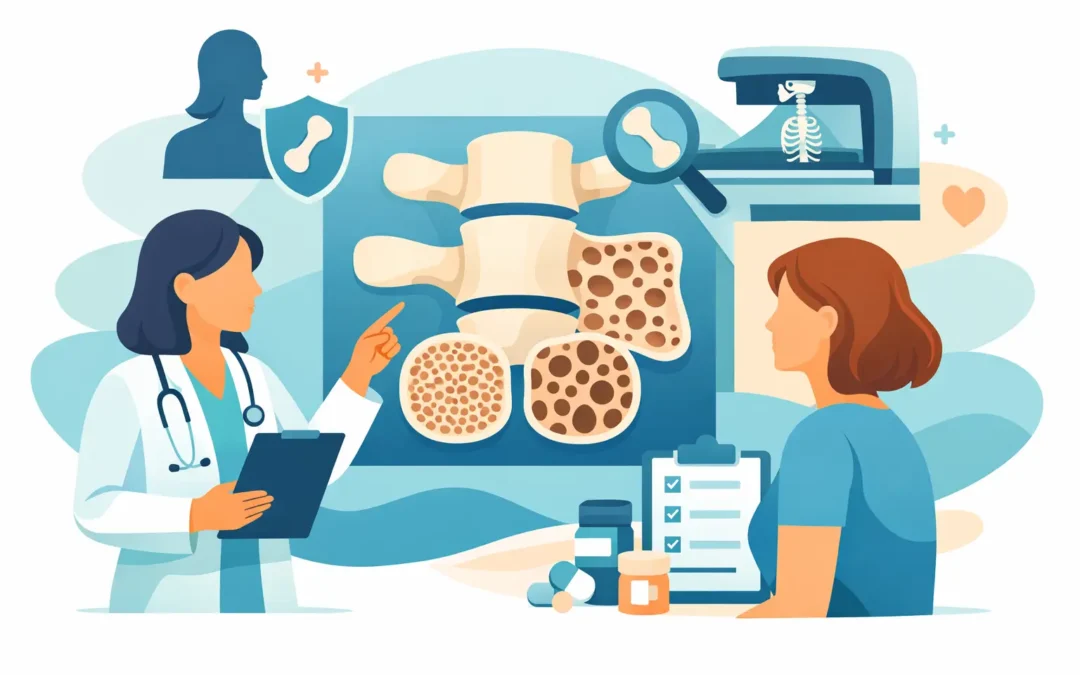
The most common test for osteoporosis screening for women is a DEXA scan, also called a DXA scan. This is a low-dose imaging test that measures bone mineral density, usually at the hip and spine.
A DEXA scan is quick, painless, and noninvasive. You lie on a table while the scanner measures bone density. There are no needles, and the radiation exposure is very low. Most patients find it easier than they expected.
Results are often reported as a T-score. This compares your bone density to that of a healthy young adult reference group. In general, a score in the normal range suggests healthy bone density, a lower score may indicate osteopenia, and a more reduced score may indicate osteoporosis.
Those categories are helpful, but the number alone does not tell the whole story. A woman with osteopenia and several fall risks may face more practical danger than someone with a similar scan and fewer risk factors. That is why doctors look at the scan along with age, fracture history, medications, balance, strength, and other health conditions.
Who may need closer attention before age 65
Earlier testing often comes up in routine primary care visits when a patient has one or more risk factors that deserve a closer look. Long-term corticosteroid use is a major example. Medications used for asthma flare-ups, autoimmune conditions, or inflammatory disorders can weaken bones over time when taken frequently or over extended periods.
Certain chronic medical issues also increase risk. Thyroid disorders, kidney disease, gastrointestinal conditions that reduce calcium or vitamin D absorption, and some cancer treatments can all affect bone health. Women with low body weight or significant unintentional weight loss may also need screening sooner.
Menopause timing matters too. Women who go through menopause early, whether naturally or after surgery, can lose bone density sooner because of reduced estrogen exposure. If that applies to you, it is worth bringing up even if it happened years ago.
Falls are another piece of the conversation. Screening is about more than what the bones look like on paper. If balance problems, muscle weakness, poor vision, neuropathy, or certain medications make falls more likely, fracture prevention becomes more urgent.
What happens if your results are abnormal
An abnormal result does not always mean you will need prescription treatment right away. Sometimes the next step is closer monitoring and a focused prevention plan. In other cases, medication may be the safest option to reduce fracture risk.
Treatment decisions depend on more than the scan result. Your age, prior fractures, overall health, and how quickly bone loss may be progressing all matter. A woman with mild bone loss at 52 will not necessarily be managed the same way as a woman with the same scan result at 72.
Lifestyle changes often play an important role. Adequate calcium and vitamin D intake, weight-bearing exercise, strength training, fall prevention, smoking cessation, and limiting alcohol can all support bone health. These steps are valuable, but they are not always enough by themselves when fracture risk is high.
Medication can be appropriate for some patients, especially after a fragility fracture or when bone density reaches the osteoporosis range. Like any treatment, these medications come with benefits and possible side effects. That is why the right plan should be based on a thoughtful discussion, not a one-size-fits-all rule.
Screening is only one part of bone health
A normal DEXA scan is reassuring, but it does not mean you can stop thinking about bone health. Bone density changes over time, and future testing may still be needed depending on your age and risk factors. How often to repeat the test depends on the initial result and your overall risk profile.
Just as important, screening does not replace the need to look at the reasons someone might fracture. Muscle strength, walking stability, blood pressure changes, medication side effects, footwear, and home safety all influence whether a fall happens in the first place. Preventing fractures often means addressing the whole patient, not just the scan.
That is where continuity in primary care really helps. When your doctor knows your medical history, medications, chronic conditions, and day-to-day health concerns, screening decisions become more precise. It also becomes easier to catch patterns such as repeat falls, posture changes, or height loss that may otherwise be missed.
Questions worth asking at your next visit
If you are not sure whether screening applies to you, a few simple questions can help guide the conversation. Ask whether your age alone makes you due for a bone density test. Ask whether your medications, menopause history, family history, or past fractures increase your risk. If you already had a DEXA scan in the past, ask when it should be repeated.
It is also reasonable to ask what your fracture risk means in practical terms. Patients often hear terms like osteopenia and osteoporosis without a clear explanation of what happens next. A good care plan should connect the test result to realistic next steps, whether that means monitoring, exercise changes, supplements, medication, or fall prevention.
For women in Katy and the surrounding West Houston communities, discussing bone health during a routine physical or preventive visit can be a smart way to stay ahead of problems that are easy to miss early on. At Medical Office of Katy, these conversations are part of a broader, patient-first approach to long-term health.
Bone loss is common, but silent does not have to mean unnoticed. When screening is done at the right time and interpreted in the context of your full health picture, it becomes a practical step toward protecting mobility, independence, and quality of life for years to come.