
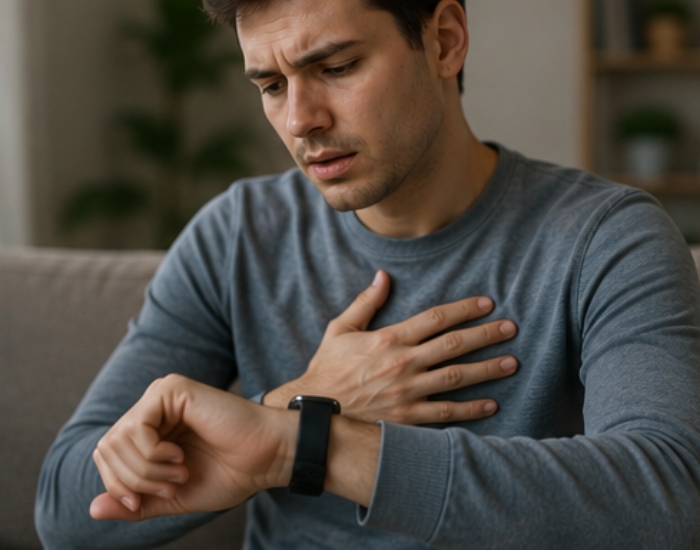
It can feel frightening when your heart suddenly starts racing while you are sitting still, lying down, or trying to sleep. Many people describe it as a “fluttering,” “pounding,” or “thumping” sensation in the chest that seems to come out of nowhere.
If you’ve ever asked yourself, “Why is my heart beating so fast when I’m not doing anything?” you’re not alone. This is a very common symptom, and while it can sometimes be harmless, it can also signal an underlying issue that needs attention.
The heart normally speeds up during exercise or stress. But when it happens at rest, it usually means something else is influencing your body’s internal balance—whether it’s hormones, stress response, hydration, or heart rhythm regulation.
Table of Contents
Important Note
This article will help you understand the most common causes of a racing heart at rest and how to recognize when it is harmless versus when it may need medical evaluation. While many cases are benign, some causes require timely diagnosis to protect heart health and prevent complications.
What Does a Racing Heart at Rest Mean?
A racing heart at rest—also called palpitations—means your heart is beating faster or more forcefully than expected when your body is not physically active.
This sensation can feel like:
- Fast pounding in the chest
- Fluttering or skipping beats
- Strong heartbeat felt in the neck or throat
- Sudden bursts of rapid pulse
Sometimes it lasts only a few seconds. Other times, it may continue for several minutes and cause anxiety or discomfort.
The key point is this: the sensation is real, but the cause is not always dangerous. The body has many systems that can temporarily speed up the heart even at rest.
However, frequent or persistent episodes should never be ignored.
Can Anxiety Cause Your Heart to Race at Rest?
Yes—anxiety is one of the most common causes of a racing heart when you are resting.
When your brain senses stress or fear, even subconsciously, it activates the “fight or flight” response. This releases adrenaline, which increases heart rate and blood pressure even if you are physically still.
People often notice this during quiet moments, such as lying in bed or sitting alone, when the body becomes more aware of internal sensations.
Common anxiety-related symptoms include:
- Rapid heartbeat without physical activity
- Shortness of breath
- Chest tightness
- Restlessness or feeling “on edge”
- Trembling or sweating
Even mild anxiety can trigger noticeable palpitations in sensitive individuals.
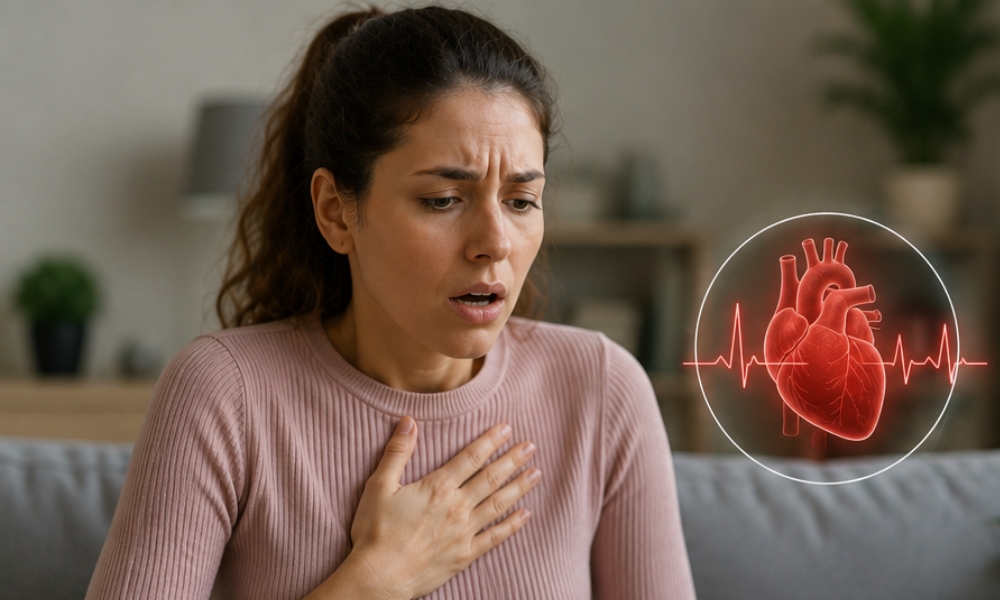
Can Dehydration Make Your Heart Beat Faster?
Yes. Dehydration is a surprisingly common cause of heart racing at rest.
When your body lacks enough fluids, blood volume decreases. This forces the heart to work harder to circulate oxygen and nutrients, leading to a faster heartbeat.
Dehydration-related symptoms may include:
- Dry mouth
- Dizziness
- Fatigue
- Dark urine
- Rapid pulse
This type of palpitations is often easily corrected by restoring hydration and electrolyte balance.
Can Thyroid Problems Cause a Racing Heart at Rest?
Yes. An overactive thyroid—also called hyperthyroidism—is a well-known medical cause of a fast heart rate even when you are completely at rest.
The thyroid gland controls your body’s metabolism. When it becomes overactive, it essentially “speeds everything up,” including your heart rate.
People with hyperthyroidism often describe a constant sense of internal “overdrive,” even when they are physically calm.
Common symptoms include:
- Resting heart rate that feels unusually fast
- Weight loss despite normal appetite
- Anxiety or irritability
- Heat intolerance and sweating
- Tremors in hands or fingers
- Difficulty sleeping
If these symptoms appear together, thyroid testing is an important next step.
Can Caffeine or Medications Trigger Heart Racing?
Absolutely. Many everyday substances can stimulate the nervous system and cause palpitations even at rest.
Caffeine is the most common trigger. It blocks adenosine (a calming brain chemical), which can increase alertness but also raise heart rate.
Other triggers may include:
- Energy drinks or high-caffeine beverages
- Decongestant medications (like pseudoephedrine)
- Nicotine products
- Some asthma inhalers
- Weight-loss or stimulant supplements
Even people who regularly consume caffeine can suddenly become more sensitive to it due to stress, dehydration, or hormonal changes.
This is why some episodes of heart racing appear “out of nowhere,” even though the trigger was consumed earlier in the day.
Could It Be a Heart Rhythm Problem?
Yes. In some cases, a racing heart at rest may be due to an arrhythmia, which means an abnormal heart rhythm.
Unlike temporary palpitations caused by stress or caffeine, arrhythmias come from electrical signaling issues within the heart itself.
Common types include:
- Supraventricular tachycardia (SVT)
- Atrial fibrillation
- Premature ventricular contractions (PVCs)
Symptoms of arrhythmia may include:
- Sudden rapid heartbeat without warning
- Irregular or “skipping” pulse
- Dizziness or lightheadedness
- Shortness of breath
- Chest discomfort
Some arrhythmias are harmless, while others require medical treatment. The key is identifying the pattern through proper evaluation such as an EKG test.
Can Lifestyle and Sleep Affect Heart Rate?
Yes. Your daily habits and sleep quality have a major impact on how your heart behaves at rest.
When the body is overtired or stressed, the nervous system stays in a heightened state of alertness. This can cause intermittent episodes of rapid heartbeat, especially during quiet moments.
Common lifestyle-related triggers include:
- Chronic stress or emotional overload
- Poor sleep or insomnia
- Overtraining or lack of rest
- Skipping meals or low blood sugar
- Alcohol consumption
In many cases, improving sleep and stress balance can significantly reduce symptoms without medication.
Important Note
Not every episode of heart racing means a serious heart condition. In fact, many cases are related to stress, dehydration, caffeine, or temporary hormonal shifts. However, if episodes become frequent, intense, or occur with dizziness or chest pain, it is important to seek medical evaluation rather than assuming it is harmless.
How Is a Racing Heart at Rest Treated?
Treatment depends entirely on what is triggering the fast heartbeat. Because palpitations are a symptom rather than a disease, the goal is to identify and correct the underlying cause rather than simply slowing the heart temporarily.
In many people, treatment is surprisingly simple once the trigger is found.
Common treatment approaches include:
- Reducing caffeine and stimulant intake
- Treating dehydration with fluids and electrolytes
- Managing anxiety through breathing techniques or therapy
- Correcting thyroid imbalance with medication
- Adjusting medications that may cause palpitations
- Improving sleep quality and routine
- Treating arrhythmias if diagnosed
For some patients, simply improving hydration, sleep, and stress levels leads to a major reduction in symptoms.
When Should You Worry About a Racing Heart?
While occasional palpitations are often harmless, there are certain warning signs that should not be ignored.
You should seek medical attention if your racing heart is accompanied by:
- Chest pain or pressure
- Fainting or near-fainting episodes
- Severe shortness of breath
- Persistent rapid heartbeat lasting more than a few minutes
- Irregular or chaotic heartbeat sensation
- Dizziness or confusion
These symptoms may indicate a more serious heart rhythm issue or another medical condition requiring evaluation.
How Doctors Evaluate Heart Palpitations
Doctors typically start by understanding the pattern of symptoms—when they happen, how long they last, and what seems to trigger them.
Common diagnostic steps include:
- Electrocardiogram (EKG/ECG)
- Blood tests (thyroid, electrolytes, anemia screening)
- Holter monitor (24–48 hour heart rhythm tracking)
- Blood pressure monitoring
- Physical examination and medical history review
These tests help determine whether the issue is temporary, lifestyle-related, or linked to a heart rhythm disorder.
Heart Care in Katy, TX
If you are experiencing frequent or unexplained episodes of heart racing at rest, getting evaluated early can provide reassurance and prevent complications.
At Medical Office of Katy, patients receive comprehensive evaluation for palpitations, heart rhythm concerns, and related symptoms.
Relevant services include:
- EKG Heart Testing
- Primary Care Evaluation
- Anxiety and Stress Management
- Blood Pressure Management
- Comprehensive Patient Services
Many patients across Katy, Richmond, and surrounding areas seek evaluation when symptoms begin interfering with sleep, work, or daily comfort.
Frequently Asked Questions
Why does my heart race when I’m resting at night?
This is often due to anxiety, caffeine, dehydration, or increased awareness of heartbeat in a quiet environment.
Can anxiety cause heart palpitations at rest?
Yes. Anxiety activates the fight-or-flight response, which increases heart rate even without physical activity.
Is it normal for my heart to suddenly start racing?
Occasional episodes can be normal, but frequent or unexplained episodes should be evaluated.
Can dehydration cause a fast heart rate?
Yes. Low fluid levels reduce blood volume, forcing the heart to beat faster.
What is the difference between anxiety and arrhythmia?
Anxiety-related palpitations are often temporary and linked to stress, while arrhythmias are caused by electrical abnormalities in the heart.
When should I go to the ER for heart racing?
If it is accompanied by chest pain, fainting, severe dizziness, or shortness of breath, emergency care is recommended.
Can sleeping position affect heart palpitations?
Yes. Some people notice palpitations more when lying on their left side due to increased awareness of heartbeat.
Final Thoughts
A racing heart at rest can feel alarming, but in many cases it is linked to manageable factors like stress, caffeine, dehydration, or sleep issues.
However, because it can also be related to thyroid disorders or heart rhythm problems, persistent symptoms should always be taken seriously.
Understanding your triggers and seeking timely evaluation can help restore peace of mind and protect long-term heart health.
Medical Disclaimer: This article is for educational purposes only and does not replace professional medical advice. If you experience persistent or severe heart symptoms, seek medical evaluation promptly.