
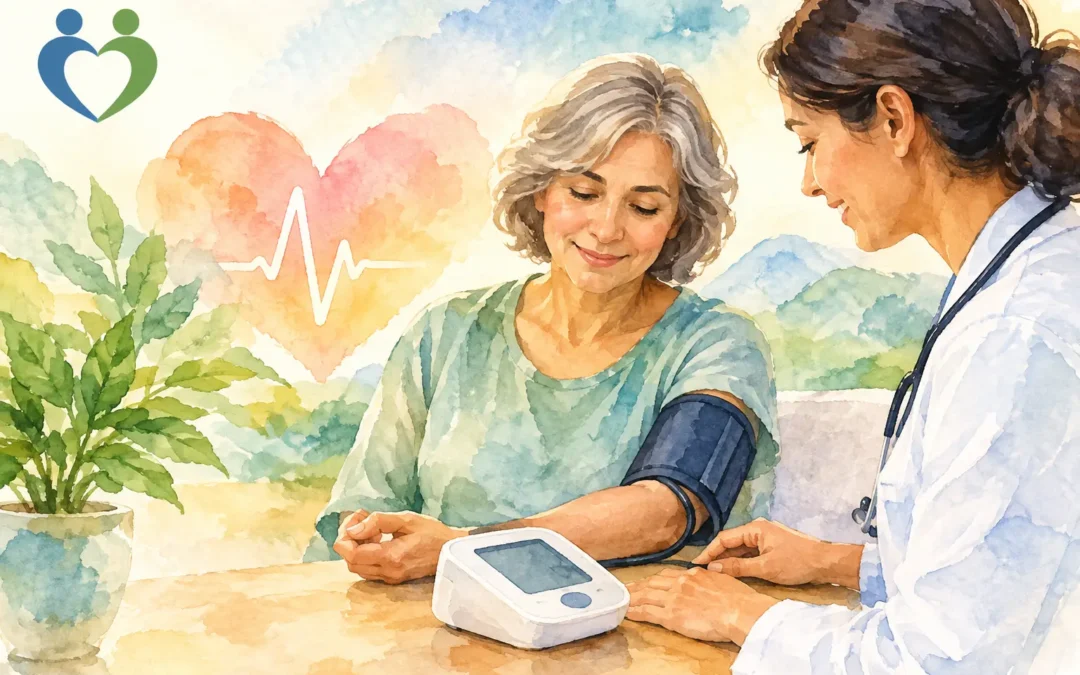
A single blood pressure reading can be affected by a rushed morning, a stressful commute, caffeine, pain, or simply talking during the measurement. What matters most is the pattern over time. Thoughtful blood pressure monitoring gives your primary care physician a clearer picture of your cardiovascular health and can help identify concerns before they lead to heart attack, stroke, kidney disease, or other complications.
High blood pressure, also called hypertension, often has no obvious symptoms. Many people feel completely well while elevated pressure is gradually placing strain on the heart and blood vessels. That is why routine office checks, accurate home readings, and ongoing follow-up each have a meaningful role in preventive care.
Why Blood Pressure Monitoring Matters
Blood pressure measures the force of blood against artery walls. It is recorded as two numbers. The top number, systolic pressure, reflects pressure when the heart contracts. The bottom number, diastolic pressure, reflects pressure while the heart relaxes between beats.
Your care team considers more than one reading when evaluating blood pressure. A number that is high during an acute illness or stressful appointment may not reflect your usual level. Conversely, a normal office reading does not always rule out elevated pressure at home. Repeated measurements help distinguish a temporary change from a persistent problem that needs treatment.
Regular monitoring can also show whether a treatment plan is working. For patients taking medication for hypertension, readings may help guide dose adjustments while avoiding blood pressure that drops too low. This is especially valuable for adults who have diabetes, kidney disease, high cholesterol, heart disease, or a family history of stroke.
Understanding Your Numbers
For many adults, a normal blood pressure is below 120/80 mm Hg. Readings from 120 to 129 systolic with a diastolic number below 80 are considered elevated. Hypertension is generally diagnosed when readings are consistently 130/80 or higher, although the right plan depends on your overall health, medical history, and cardiovascular risk.
A reading of 180/120 or higher needs prompt attention, particularly if it remains high after resting quietly and repeating the measurement. Call 911 or seek emergency care right away if a severely elevated reading occurs with chest pain, shortness of breath, severe headache, confusion, weakness or numbness on one side, trouble speaking, vision changes, or other symptoms that could signal an emergency.
Numbers should never be interpreted in isolation. Age, pregnancy status, medications, symptoms, and conditions such as kidney disease all affect what is appropriate for an individual patient. Your physician can help place readings in context and explain the goals that make sense for you.
How to Check Blood Pressure Correctly at Home
Home blood pressure monitoring is most useful when the technique is consistent. An automatic upper-arm cuff is generally preferred over wrist or finger devices because it tends to provide more reliable readings when properly fitted. The cuff size matters as well. A cuff that is too small or too large can produce inaccurate results.
Before checking your pressure, avoid exercise, smoking, caffeine, and alcohol for at least 30 minutes when possible. Empty your bladder, then sit quietly for five minutes. Sit in a chair with your back supported, both feet flat on the floor, and legs uncrossed. Rest your bare arm on a table so the cuff is at heart level.
Do not talk, text, watch an upsetting program, or hold your arm in the air during the measurement. Take two readings about one minute apart and record both, along with the date, time, and any relevant details such as a headache, missed medication, or unusual stress. Morning and evening readings over several days often provide more useful information than a single check.
If you are unsure whether your monitor is accurate, bring it to an office visit. Your care team can compare it with a clinical reading and confirm that the cuff fits correctly.
Common reasons home readings can be misleading
Even a quality monitor cannot compensate for poor technique. Checking immediately after climbing stairs, measuring over clothing, using the wrong cuff size, or talking during the reading can all raise the result. Irregular heart rhythms may also affect some automatic devices.
It is also common to check repeatedly after seeing one higher-than-expected number. That can increase anxiety and make the next reading higher. Unless you have concerning symptoms or have been given different instructions by your physician, sit quietly, repeat the measurement once, and record the result rather than testing over and over.
When Office Readings and Home Readings Differ
Some patients have higher blood pressure in a medical setting than they do at home. This is often called white coat hypertension. Others may have normal office readings but higher pressure in their daily lives, sometimes called masked hypertension. Neither situation should be dismissed without a conversation with your physician.
A home log can clarify these patterns. In some cases, your clinician may recommend ambulatory monitoring, which records blood pressure at intervals over a full day and night. This can be helpful when the diagnosis is uncertain or when treatment decisions need more detailed information.
The goal is not to chase a perfect number at every moment. Blood pressure naturally changes throughout the day. The goal is to understand your average pattern, identify avoidable triggers, and make safe decisions based on reliable information.
Building a Plan Beyond the Cuff
Monitoring is a tool, not a complete treatment plan. If readings remain above goal, your physician may recommend lifestyle changes, medication, or both. The most effective approach depends on how high your readings are and whether you have other health conditions.
Small, sustainable changes can make a meaningful difference. Reducing sodium, eating more vegetables and fiber-rich foods, maintaining a healthy weight, being physically active, limiting alcohol, getting adequate sleep, and avoiding tobacco all support heart health. Stress management can help as well, although it should not replace medical care when blood pressure is consistently high.
Medication is often necessary and can be very effective. Do not stop or change blood pressure medication based on a few home readings without medical guidance. Some medications require gradual adjustment, and others can affect electrolytes or kidney function, making follow-up testing an important part of safe care.
At Medical Office of Katy, blood pressure care is approached as part of your whole health. A visit can include reviewing your home log, medications, diet, sleep, weight, family history, and related risks such as diabetes or high cholesterol. This broader view helps create a practical plan that fits your daily routine rather than a one-size-fits-all recommendation.
When to Schedule a Visit
Schedule a primary care visit if you are repeatedly seeing readings at or above 130/80, if you have been told you have high blood pressure but have not had recent follow-up, or if you are having medication side effects. Bring your blood pressure monitor and a written or digital record of readings if available.
You should also talk with a physician if you have dizziness, fainting, unusually low readings, or significant differences between arms. These concerns may have several causes and deserve a careful evaluation rather than guesswork.
Reliable blood pressure monitoring turns a quick number into useful information. With accurate readings and consistent follow-up, you and your care team can make decisions that protect your health not only at the next appointment, but for the years ahead.